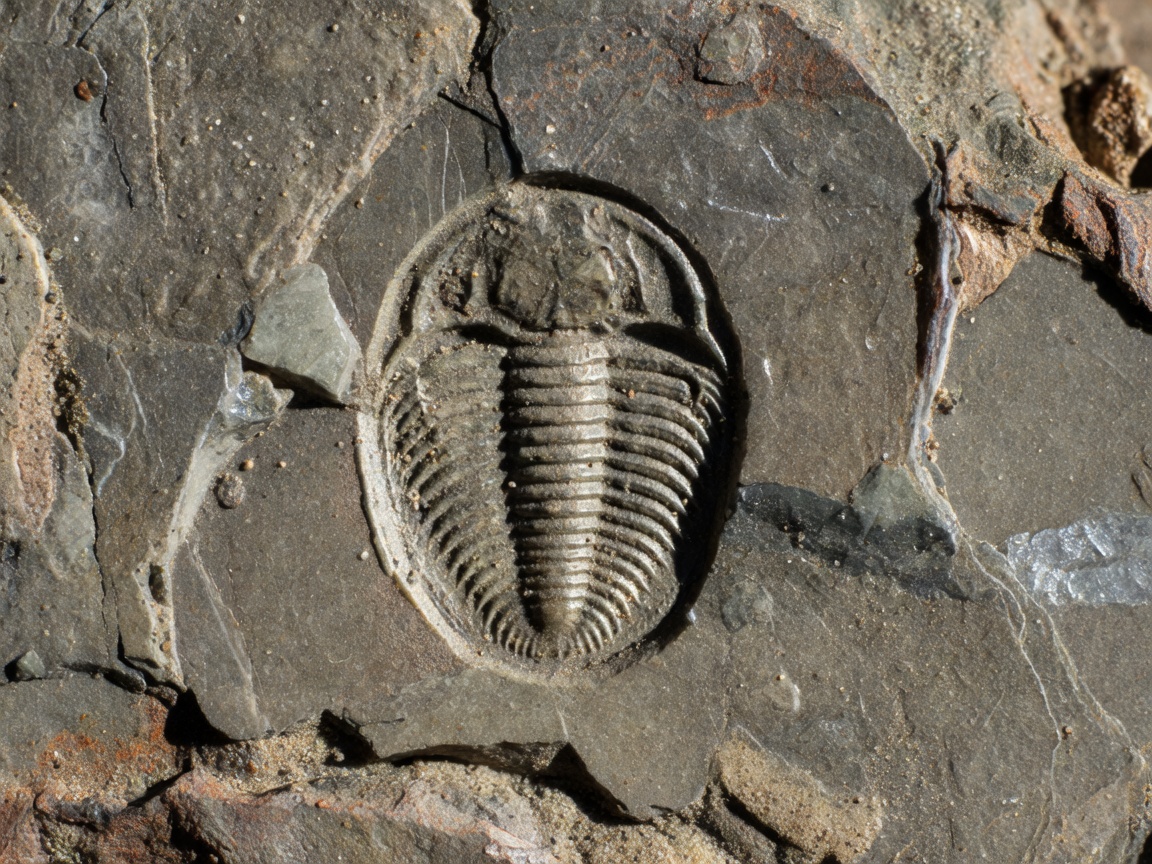
A fossil is evidence of past life or activity preserved in geological material. Identifying one from a photograph or isolated fragment is often uncertain. Scale, orientation, matrix, locality and associated material can all matter. Begin with a neutral description, not a confident species name.
Visual identification: describe before naming
Record the object’s outline, symmetry, repeated features, surface texture and visible breaks. Note whether a feature appears raised, recessed, flattened or repeated. Use ordinary descriptive language first: “curved ribbed surface” is more defensible than an unsupported taxonomic label. Compare observations with reliable museum resources, geological references or a qualified specialist.
Photographs can hide depth, scale and colour changes. Use several views when photography is allowed, and include a scale only where it can be placed without touching or moving the object. Do not crop away the surrounding rock if it may carry useful context. A photo-based identification should remain provisional unless supporting evidence is available.
Matrix versus fossil material
Matrix is the rock or sediment surrounding or supporting a fossil. It can contain grain patterns, mineral veins, weathering marks and fractures that resemble biological structures. A fossil may be partly exposed while most of it remains within matrix. Distinguishing biological form from geology can require magnification, comparison specimens or specialist preparation.
Look for coherent structure and repeated biological pattern, but treat those clues cautiously. Crystals, concretions and sedimentary textures can form regular shapes. A single groove or rounded feature is not enough to establish a fossil. Record what is visible and seek a second opinion through an appropriate museum, university collection or geological society rather than attempting to expose more material yourself.
Common preservation forms
Mineral replacement: original material is replaced by minerals during burial and later geological change. Details may be retained at different scales, but composition and appearance vary.
Permineralization: minerals fill spaces within porous remains, such as some bone or wood. The result can retain internal structure while changing the material.
Impression: a surface leaves a mark in sediment that later hardens. An impression may record external shape without preserving the original body material.
Cast and mold: a mold is a cavity or negative impression; a cast forms when that space is filled. The cast reproduces shape, not necessarily the original substance.
Compression and carbon film: burial pressure can flatten remains. In some cases, a thin carbon-rich residue records parts of the organism. Trace fossils—tracks, burrows or other activity marks—record behaviour rather than a body. These categories can overlap, and a specimen may preserve different parts in different ways.
Document a specimen without inventing data
Use a field note or digital record to capture the date observed, broad location, permission context, visible features, dimensions if measured safely, image references and uncertainty. Include rock type only when you can support the description. State whether the material was seen in place, loose on a permitted public surface or encountered in a collection. Never add a made-up catalogue number or imply that a note is an institutional record.
- Keep original photographs and add captions with date and broad context.
- Separate direct observation from interpretation.
- Record the source of any later identification.
- Protect sensitive locality information when disclosure could threaten a site.
- Follow collection citation and image-use requirements.
Handling and storage principles
Leave fossils in place when collecting is prohibited, permission is absent or the material is fragile. Even apparently robust fragments can split along hidden cracks. If lawful handling is permitted, minimize contact, support the object from beneath and avoid pressure on thin edges. Do not wash, glue, coat, drill, scrape or chemically treat an unknown specimen.
Professional conservation decisions depend on material, condition, provenance and intended use. Chemicals and improvised cleaning can cause irreversible damage or create hazards. This guide is not conservation training. For a fragile or scientifically important specimen, contact a qualified conservator or the institution responsible for its care. Storage should keep material stable, supported and clearly associated with its documentation; specific conditions depend on composition and environment.
Plan a responsible identification visit
For field observation, verify access rules and use safe public positions. For collections, request access through the institution and follow handling conditions. Museum staff may be able to direct you to a suitable reference or explain limits on identification from photographs. Avoid asking staff to endorse an uncertain claim without adequate evidence.
Good for
Learning a disciplined description method, distinguishing preservation categories and creating useful observation notes without risky preparation.
What to know
Identification may remain uncertain. Do not use this guide to justify collecting, entering restricted land or attempting professional conservation work.
Field method: locate, identify, contextualize, preserve, record
Locate the material in a legal, safe setting. Identify only what the evidence supports. Contextualize it with geology and locality records. Preserve it by avoiding unnecessary handling or alteration. Record observations in a transparent format. The sequence keeps a fossil connected to the information that gives it meaning.